


Your Momentum
Everyday situations from your own perspective. Decisions, pressure, opportunities, and reactions as you would experience them yourself.
36 situationsAfter this test, you can create an account - even without an invitation.
 YouLoggit Momentum Explore the way you reach goals Discover what drives you, what holds you back, and how to move forward more effectively
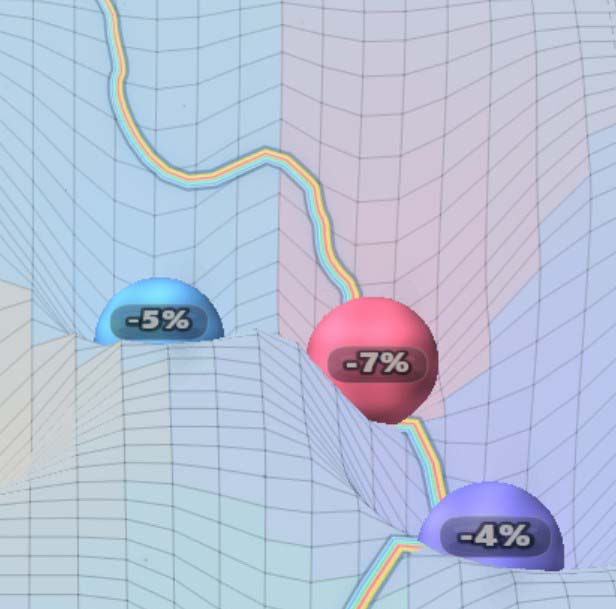
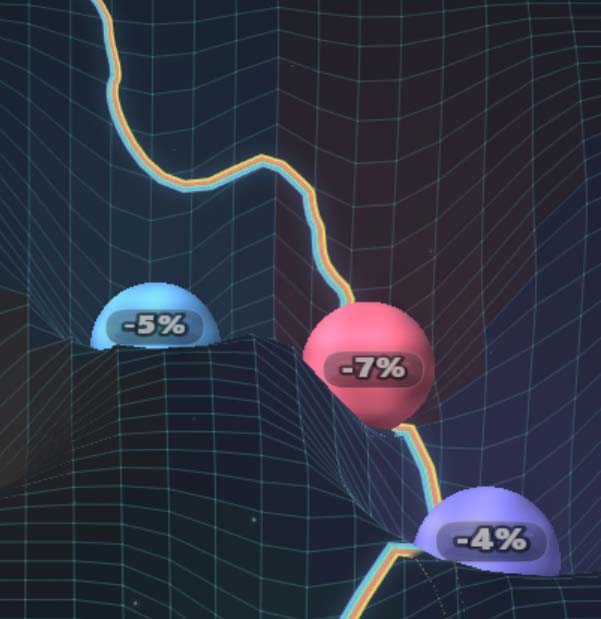
Experience a fascinating visualization of the interplay between your internal and external braking and accelerating factors. In the YouLoggit Momentum Goal Game (YMGG), you make decisions in fictional situations. From these decisions, the game derives your conscious and unconscious way of pursuing goals. The more authentically you decide, the more accurate and surprisingly helpful the simulation can be for you.
Completing the test unlocks YouLoggit registration; you can save your profile and sign in to YouLoggit:
Make YL your new end-to-end encrypted messenger and invite others to join. Log your path toward your goals in journals. Find new friends, follow inspiring people, and share your content with the people you choose. Grow together with like-minded people across different areas of life.
Registration and use of the core features are free.
The more honestly you answer, the more precise - and sometimes surprising - the insights can become.
This notice applies only to taking Momentum. The general privacy policy and the processing described there also apply to the later creation and use of a YouLoggit account.
Controller. YouLoggit GmbH is the controller responsible for processing. You can find the full contact details in the general privacy policy.
Data processed. Momentum processes the name or pseudonym you provide, your selected character, your answers to the game situations and the Momentum facets calculated from them.
Purpose and legal basis. The data is processed to carry out the Momentum Goal Game that you explicitly started, evaluate it using rules, and provide you with the result and access to the Gravity Goal Simulator. To the extent that this processing is necessary for those purposes, it is based on Article 6(1)(b) GDPR.
Evaluation. When you complete the game, your answers are transmitted to our server over an encrypted connection. The content is evaluated there exclusively by an automated, rule-based algorithm developed by Maxim Szenessy. This produces your Momentum image from the calculated facets. No AI models are used to assess the content, and Momentum does not make automated decisions that produce legal or similarly significant effects.
Storage period. While a game is still in progress, your name, character and answers so far are stored locally on your device for no more than 36 hours. The individual answers are not stored permanently on our server after the game has been completed and evaluated. The calculated result, including name, character and facets, may be stored locally on your device for up to 30 days.
Transfer to a YouLoggit account. Using Momentum locally and saving a result to a YouLoggit account are separate processes. Only if you explicitly decide to transfer your Momentum result to your account will the required facets be associated with your user account.
Hosting during the test phase. Momentum is currently hosted using IONOS web hosting. A data processing agreement is in place with IONOS SE. The web-hosting infrastructure used is located in Germany; IONOS also states that, for web hosting, website visitor data is not transferred to third countries outside the European Union.
Your rights. You have statutory data-protection rights, in particular the rights of access, rectification, erasure and restriction of processing and, where applicable, data portability and the right to lodge a complaint with a data-protection supervisory authority. You can find more information in the general privacy policy.
Momentum is intended solely for voluntary self-reflection and orientation. The results are based on your information and on a rule-based approximation model developed by Maxim Szenessy.
Momentum is not a medical, psychological or clinical diagnosis, nor is it therapy, a health or risk assessment, or a professional suitability assessment. The facets and simulations shown are model interpretations and can only approximate individual behavioral and decision tendencies.
Do not use Momentum as the sole basis for important health, career, financial or legal decisions. If a decision requires professional advice, Momentum does not replace that advice.
YouLoggit does not guarantee that results are complete or accurate for your individual circumstances. Any liability required by law remains unaffected.
Everyday situations from your own perspective. Decisions, pressure, opportunities, and reactions as you would experience them yourself.
Unfamiliar decisions, different ways of living, and more freedom: stepping away from everyday life can reveal which reactions truly belong to you.
Return to your school years and experience the same situations from changing roles. This can reveal patterns that easily stay hidden from your usual perspective.
Responsibility, pressure, collaboration, and hierarchy change how we decide. Experience what different roles bring out in you.
Familiar conflicts look different when you change sides. Experience expectations, closeness, and responsibility from several points of view.
These profiles are deliberately exaggerated stereotypes designed to show what the simulator can do. They are not intended as psychological assessments. The profile images were generated with AI.
Describes how strongly you trust that your own actions can make a difference. Example: When facing a difficult project, you are more likely to think "I can find a way" than "That is out of my hands anyway."
Describes your confidence in your own abilities and in being able to build missing knowledge or skills quickly enough. Example: With an unfamiliar tool, you trust yourself to learn how to use it rather than handing off the task immediately.
Describes how easily you move from thinking to doing. Example: An idea becomes a first draft, a phone call, or another small first step today.
Describes how consistently you keep pursuing a goal over time, even when progress is slow. Example: A training plateau does not automatically make you give up on the goal.
Describes how well you handle disappointment, mistakes, and setbacks without writing off or abandoning the goal too quickly. Example: A failed attempt becomes useful information for the next try rather than the end of the road.
Describes how well you can change your strategy and approach when circumstances change. Example: If an important part of your plan falls through, you look for another route instead of clinging to the original one.
Describes how strongly a goal is sustained by your own interest, sense of purpose, or personal meaning. Example: You keep working on something because it matters to you - even when nobody is watching or rewarding you for it.
Describes how strongly external incentives such as recognition, status, competition or a specific reward increase your motivation. Example: A public challenge or a visible result can give you additional momentum.
Describes how well you coordinate your actions with others and develop shared solutions. Example: In a group, you divide tasks so that different strengths work together effectively.
Describes how easily you can accept support without feeling that it takes away from your independence or competence. Example: On a difficult task, you draw on the knowledge of someone experienced instead of insisting on solving everything alone.
Describes how well you can hand tasks and responsibility to others while accepting that they may approach them differently. Example: You fully hand over a clearly defined part of a project instead of controlling every step yourself.
Describes how well you can provide direction, create clarity, make decisions, and get others moving toward a shared goal. Example: When a group is stuck, you define the next step and get everyone moving again.
Describes how well you can protect your own time, energy and priorities from other people's expectations. Example: You can decline or limit a request if it threatens an important goal of your own.
Describes how well you can keep acting when faced with disagreement, criticism, and open conflict. Example: You can stand behind a controversial decision without needing to avoid the conflict or win it personally.
Describes how strongly possible approval, criticism or rejection from others influences your decisions. Example: A good idea can lose momentum if you expect to be criticized publicly for it.
Describes how strongly perceived obligations toward others can override your own goal. Example: You repeatedly give up your own plans because you would otherwise feel guilty, even though other solutions would be possible.
Describes the tendency to put your own needs, rest, or resources far behind a goal or other people. Example: You keep working beyond your limits because the project feels more important than your own reserves.
Describes how strongly a result needs to be perfect, complete, or under your control before you feel comfortable with it. Example: You spend a lot of extra time on details or hesitate to hand off tasks even when a good solution would already be good enough.
Describes how strongly the possibility of failure makes starting, taking risks or making decisions harder. Example: You keep preparing because a visible failed attempt weighs more heavily than the chance to learn from an early attempt.
Describes whether success itself can bring uncomfortable consequences - such as attention, expectations, or public judgment. Example: You want to succeed at something but feel uncomfortable with the idea of becoming highly visible because of it.
Describes how difficult you find it to act while important information or the outcome is still uncertain. Example: You prefer to wait for more certainty even when it would already be reasonable to decide under uncertainty.
Describes how strongly fixed internal rules and beliefs restrict your possible courses of action. Example: Thoughts such as "This is how it has to be done" or "I must not do that" can block alternatives even when the situation has changed.
Describes how realistically you account for time, resources, dependencies, and possible disruptions in your planning. Example: A project plan includes not only the ideal case but also buffers for work that tends to take longer.
Describes how accurately you judge the difficulty of a task in relation to your abilities. Example: You recognize whether a challenge calls for practice, additional help, or genuinely a different plan.
Describes how strongly you believe your own behavior can influence the outcome of a situation. Unlike confidence in your abilities, this is less about "Can I do this?" and more about "Does what I do make a difference to the outcome?"
Describes how clearly you can choose between competing tasks and goals. Example: When ten things all seem important at once, you recognize which two will genuinely make the biggest difference today.
Describes how much effort, sacrifice or cost you are consciously willing to bear for an important goal. Example: You temporarily accept having less free time for a project - without confusing the price with the value of the goal.









 Drive and commitment
 Social goal skills
 Internal brakes
 Reality checking and self-regulation