



Beyond Everyday Life
Unfamiliar decisions, different ways of living, and more freedom: stepping away from everyday life can reveal which reactions truly belong to you.
Available after registration.
 YouLoggit Momentum Explore the way you reach goals Discover what drives you, what holds you back, and how to move forward more effectively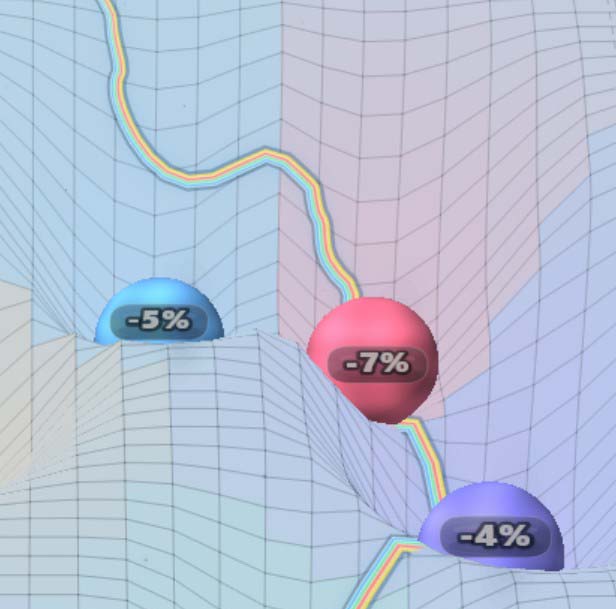
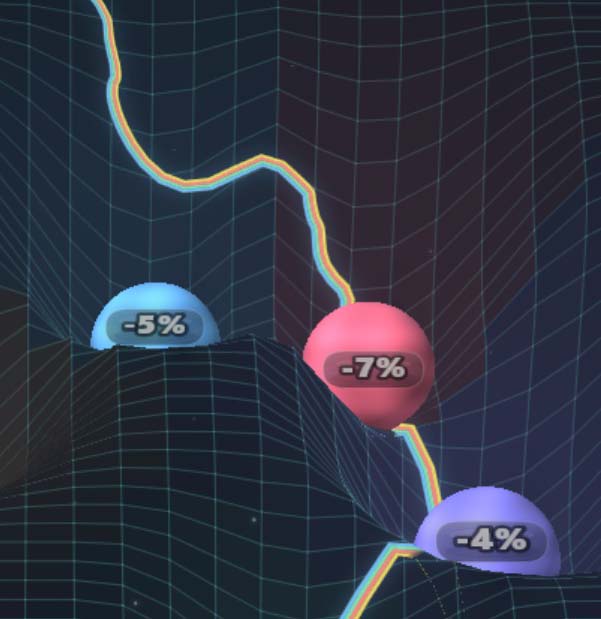
Experience a fascinating visualization of the interplay between your internal and external braking and accelerating factors. In the YouLoggit Momentum Goal Game (YMGG), you make decisions in fictional situations. From these decisions, the game derives your conscious and unconscious way of pursuing goals. The more authentically you decide, the more accurate and surprisingly helpful the simulation can be for you.
Completing the test unlocks YouLoggit registration; you can save your profile and sign in to YouLoggit:
Make YL your new end-to-end encrypted messenger and invite others to join. Log your path toward your goals in journals. Find new friends, follow inspiring people, and share your content with the people you choose. Grow together with like-minded people across different areas of life.
Registration and use of the core features are free.
The more honestly you answer, the more precise - and sometimes surprising - the insights can become.
This notice applies only to taking Momentum. The general privacy policy and the processing described there also apply to the later creation and use of a YouLoggit account.
Controller. YouLoggit GmbH is the controller responsible for processing. You can find the full contact details in the general privacy policy.
Data processed. Momentum processes the name or pseudonym you provide, your selected character, your answers to the game situations and the Momentum facets calculated from them.
Purpose and legal basis. The data is processed to carry out the Momentum Goal Game that you explicitly started, evaluate it using rules, and provide you with the result and access to the Gravity Goal Simulator. To the extent that this processing is necessary for those purposes, it is based on Article 6(1)(b) GDPR.
Evaluation. When you complete the game, your answers are transmitted to our server over an encrypted connection. The content is evaluated there exclusively by an automated, rule-based algorithm developed by Maxim Szenessy. This produces your Momentum image from the calculated facets. No AI models are used to assess the content, and Momentum does not make automated decisions that produce legal or similarly significant effects.
Storage period. While a game is still in progress, your name, character and answers so far are stored locally on your device for no more than 36 hours. The individual answers are not stored permanently on our server after the game has been completed and evaluated. The calculated result, including name, character and facets, may be stored locally on your device for up to 30 days.
Transfer to a YouLoggit account. Using Momentum locally and saving a result to a YouLoggit account are separate processes. Only if you explicitly decide to transfer your Momentum result to your account will the required facets be associated with your user account.
Hosting during the test phase. Momentum is currently hosted using IONOS web hosting. A data processing agreement is in place with IONOS SE. The web-hosting infrastructure used is located in Germany; IONOS also states that, for web hosting, website visitor data is not transferred to third countries outside the European Union.
Your rights. You have statutory data-protection rights, in particular the rights of access, rectification, erasure and restriction of processing and, where applicable, data portability and the right to lodge a complaint with a data-protection supervisory authority. You can find more information in the general privacy policy.
Momentum is intended solely for voluntary self-reflection and orientation. The results are based on your information and on a rule-based approximation model developed by Maxim Szenessy.
Momentum is not a medical, psychological or clinical diagnosis, nor is it therapy, a health or risk assessment, or a professional suitability assessment. The facets and simulations shown are model interpretations and can only approximate individual behavioral and decision tendencies.
Do not use Momentum as the sole basis for important health, career, financial or legal decisions. If a decision requires professional advice, Momentum does not replace that advice.
YouLoggit does not guarantee that results are complete or accurate for your individual circumstances. Any liability required by law remains unaffected.
Unfamiliar decisions, different ways of living, and more freedom: stepping away from everyday life can reveal which reactions truly belong to you.
Everyday situations from your own perspective. Decisions, pressure, opportunities, and reactions as you would experience them yourself.
Return to your school years and experience the same situations from changing roles. This can reveal patterns that easily stay hidden from your usual perspective.
Responsibility, pressure, collaboration, and hierarchy change how we decide. Experience what different roles bring out in you.
Familiar conflicts look different when you change sides. Experience expectations, closeness, and responsibility from several points of view.
These profiles are deliberately exaggerated stereotypes designed to show what the simulator can do. They are not intended as psychological assessments. The profile images were generated with AI.
You open your latest electric bill: nearly $600 due. According to the statement, you used significantly more electricity than last year, even though nothing important has changed at home. You can read your current meter, but you know very little about utility billing. What do you do?
Your phone, laptop, and two hard drives now hold around 30,000 photos. Many are duplicates, some exist on only one device, and you have meant to clean up the mess for years. Now your phone is running low on storage too. What do you do?
You have been training for a 10-kilometer race for eight weeks. For three weeks, your time has not improved at all. On Friday, friends spontaneously invite you on a weekend trip; your long training run is actually scheduled for Saturday morning. What do you decide?
For next school year, you have room for one AP course. You want AP World History. Your parents think that is a bad decision and put almost unbearable pressure on you. They demand that you take AP Biology instead. Your course request is due Friday. How do you handle it?
Someone you know takes you along to their painting class. Today they are doing watercolors. Your first watercolor gets a lot of praise, while theirs barely gets noticed. What does that bring up for you?
You are in an escape room with four friends. There are 20 minutes left. On the table are a combination lock, a card covered in symbols, and several notes. One person thinks they found a lead in the symbols, two are arguing about the lock, and someone wants to ask the game master for a hint. What do you do?
After a burst pipe, water is standing in your basement. Several boxes containing photos, documents, books and other belongings are already damp. Three people from the building spontaneously come to help, but seem to be standing around doing nothing. The building manager says you have about half an hour before the water rises further. How do you organize the time?
You have kept today free to review one last time for your exam tomorrow. You really want to feel prepared. A good friend contacts you and urgently needs several hours of support. What do you decide?
Tomorrow morning, the four of you are presenting an important project. You agreed to combine all the slides and finish the presentation the night before. After an extremely exhausting week, you are sitting in front of it at 10 p.m. and realize you are completely wiped out. Someone else in the group could take over, but they would have to get up to speed quickly. What do you do?
An idea has been on your mind for a while. Today you unexpectedly have some time to work on actually making it happen. It is not enough time to develop the idea perfectly. What do you do?
At a friend's birthday party, the sound system fails shortly before the planned speeches. A technician cannot be reached. You know the basics, but not this mixer. Another guest says they used to work with event tech, but they do not know this device either. What do you do?
You have wanted to learn Spanish for months because next year you want to spend several weeks traveling through South America. You actually enjoy learning it. Still, messages, plans, and little errands win out almost every evening - and another month has gone by. What happens to the goal?
For a friend's birthday, you arranged dinner at a restaurant, bowling, and a bar afterward. But the group changes the plan on the fly, you lose track of each other for a while, and the bar reservation is lost. In the end, everyone finds each other again at a fast-food place. Everyone had a great night - especially the birthday person, who seems happy and grateful. How do you feel about it?
In the evening, you post a short, funny video of a failed cake and do not think much of it. The next morning it has more than 100,000 views. Between lots of praise there is mockery, personal comments and constantly changing numbers. What draws your attention first?
You promised to help for one hour at a bake-sale table at a neighborhood street fair. When you arrive, the person in charge is ill and you are asked to run the stall until the evening. You already had plans of your own afterwards. What do you decide?
You are coordinating a dinner with several friends for 20 guests. One hour before it starts, two very experienced home cooks get into a heated argument over which dish should take priority. Both expect you to decide, and everyone else has stopped and is listening. What do you do?
Your father is having knee surgery and will need regular help with everyday life for about six weeks afterward. Almost at the same time, you are offered a lucrative freelance contract with temporary housing in another city. Some of the help could be arranged, but not all of it. Your father also does not want strangers in the house. How do you handle the next few weeks?
You have spent years working on a project you care deeply about, carefully crafting many of the details yourself. Your boss now does almost everything with AI and thinks your way of working is no longer appropriate. They tell you directly: if you do not change it substantially, they want to let you go. How do you respond?
You have been planning your birthday for weeks with 25 guests. Two days beforehand, the venue calls: it has to close because of water damage. Some guests already have hotel rooms or flights booked. What do you do?
At a wedding with around 70 guests, the person who was supposed to emcee the evening drops out at the last minute. The bride asks whether you can take over. You are generally comfortable speaking in front of people, but you have never done anything like this before - and the program starts in 90 minutes. What do you decide?
In 90 minutes, an important job interview begins. While getting dressed, you notice a stain on the only shirt you had planned to wear, your transit app reports delays, and a document you wanted to bring is not where you expected it to be. What do you do first?
In ten days, you are playing a piano piece at a small recital that you have been practicing for weeks. You can basically play it, but two difficult passages still regularly fall apart under pressure. Your piano teacher says you could easily switch to an easier piece. If you really want to play this one reliably, you would have to practice significantly more over the next few days and put other things aside. What do you do?
You upload a photo you are especially proud of to a large online photography group. Many members praise exactly the mood that mattered to you. Later, an experienced photographer comments publicly that this exact effect is cheesy and technically weak. What does that do to you?
You organize a charity run for an animal shelter with four friends. One wants to raise as much money as possible, one mainly wants reach on social media, one wants a relaxed day with friends, and one absolutely wants to turn it into a sporting competition. At the second meeting, everyone pulls in a different direction. How do you lead the group forward?
You are creating a photo book for your parents' wedding anniversary. A designer friend sees your draft, gives you very specific feedback and offers to completely redesign some of the most important pages. You value her skill, but you want the book still to feel genuinely yours in the end. How do you respond?
At a community group meeting, you suggest organizing a larger summer event. Before you can finish explaining your plan, someone says in front of everyone: "You are overestimating yourself. You will never pull that off." For a moment, the room goes quiet. What happens inside you in the first few seconds?
You decided to make twelve Christmas gifts yourself this year. Ten days before Christmas, only three are finished. The rest are taking much longer than you expected. You could simply buy some of them - but it mattered to you that everyone receive something handmade. What do you do?
For years, you have wanted to live in Japan for a few months and study Japanese intensively there. Now, at short notice, you are offered an affordable place in a three-month language program and could sublet your apartment. You would have to use some savings, take unpaid time off, and put other things aside. How do you decide?
You have been trying for some time to build a project of your own. For the next step, you need contacts, access to certain opportunities, or people willing to join in. So far, almost everyone has brushed you off or called the idea unrealistic. Then a well-connected person offers to support you. They could open doors and bring other people on board. But during the conversation, you increasingly get the feeling that this help may come with a price later - without the person openly saying what they expect. How do you handle it?
For many months, you have been working on a demanding personal project alongside your regular life, and it matters a great deal to you. It takes up many evenings and weekends. Recently, two friends independently told you they miss you and that time together almost always comes second to the project. You do not want to simply give it up, but you can feel the strain between you now. What do you do?
A local theater is looking for amateur performers for a large community production. You really want to take part. The audition is not for another four months, and until then you would need to work regularly on a monologue and your voice. Your mother, a former actor, thinks your chances are low and repeatedly says you could probably save yourself the effort. What does that uncertainty do to your commitment?
You are on the train for a day trip you have been looking forward to for weeks. In the family group chat, someone writes that your grandfather's phone has stopped working. He can be reached by landline and he is fine, but without messaging he feels cut off. Several people write, "Someone really needs to go over there today." No one asks you directly. What do you do?
You like the work you are doing now. Unexpectedly, you are offered a much larger project. It would come with more pay, an official title, and significantly more influence. At the same time, you would have to present results regularly to senior leadership and would be clearly identifiable as responsible for success or failure. From a technical standpoint, you believe you can handle the job. What does the offer bring up first?
You have gone self-employed and share a new office with three other people: a couple and one other self-employed person. At first, it sounded promising - shared space, shared costs, and maybe even referrals to one another. But as soon as you start furnishing the office, your ideas diverge sharply. The couple wants a cohesive, professional look; the other person wants to spend as little as possible and buy many things used. Some things matter to you as well. After several discussions, one thing is clear: if every single decision has to be made together, this will be difficult. How do you handle it?
For ten years, you have spent a long weekend with the same group of friends at the same festival. This year, for the first time, you want to use the days off for yourself and go to the beach. When you tell them, several react with disappointment: "It's our tradition. It won't be the same without you." The festival accommodation now needs to be booked. What do you decide?
Your written driver's test is in three weeks, and you have scheduled study time across several evenings. A friend who passed recently says reading the material once was enough for them. They tell you to come to the club instead - "it'll be fun!" How do you handle your plan?
Describes how strongly you trust that your own actions can make a difference. Example: When facing a difficult project, you are more likely to think "I can find a way" than "That is out of my hands anyway."
Describes your confidence in your own abilities and in being able to build missing knowledge or skills quickly enough. Example: With an unfamiliar tool, you trust yourself to learn how to use it rather than handing off the task immediately.
Describes how easily you move from thinking to doing. Example: An idea becomes a first draft, a phone call, or another small first step today.
Describes how consistently you keep pursuing a goal over time, even when progress is slow. Example: A training plateau does not automatically make you give up on the goal.
Describes how well you handle disappointment, mistakes, and setbacks without writing off or abandoning the goal too quickly. Example: A failed attempt becomes useful information for the next try rather than the end of the road.
Describes how well you can change your strategy and approach when circumstances change. Example: If an important part of your plan falls through, you look for another route instead of clinging to the original one.
Describes how strongly a goal is sustained by your own interest, sense of purpose, or personal meaning. Example: You keep working on something because it matters to you - even when nobody is watching or rewarding you for it.
Describes how strongly external incentives such as recognition, status, competition or a specific reward increase your motivation. Example: A public challenge or a visible result can give you additional momentum.
Describes how well you coordinate your actions with others and develop shared solutions. Example: In a group, you divide tasks so that different strengths work together effectively.
Describes how easily you can accept support without feeling that it takes away from your independence or competence. Example: On a difficult task, you draw on the knowledge of someone experienced instead of insisting on solving everything alone.
Describes how well you can hand tasks and responsibility to others while accepting that they may approach them differently. Example: You fully hand over a clearly defined part of a project instead of controlling every step yourself.
Describes how well you can provide direction, create clarity, make decisions, and get others moving toward a shared goal. Example: When a group is stuck, you define the next step and get everyone moving again.
Describes how well you can protect your own time, energy and priorities from other people's expectations. Example: You can decline or limit a request if it threatens an important goal of your own.
Describes how well you can keep acting when faced with disagreement, criticism, and open conflict. Example: You can stand behind a controversial decision without needing to avoid the conflict or win it personally.
Describes how strongly possible approval, criticism or rejection from others influences your decisions. Example: A good idea can lose momentum if you expect to be criticized publicly for it.
Describes how strongly perceived obligations toward others can override your own goal. Example: You repeatedly give up your own plans because you would otherwise feel guilty, even though other solutions would be possible.
Describes the tendency to put your own needs, rest, or resources far behind a goal or other people. Example: You keep working beyond your limits because the project feels more important than your own reserves.
Describes how strongly a result needs to be perfect, complete, or under your control before you feel comfortable with it. Example: You spend a lot of extra time on details or hesitate to hand off tasks even when a good solution would already be good enough.
Describes how strongly the possibility of failure makes starting, taking risks or making decisions harder. Example: You keep preparing because a visible failed attempt weighs more heavily than the chance to learn from an early attempt.
Describes whether success itself can bring uncomfortable consequences - such as attention, expectations, or public judgment. Example: You want to succeed at something but feel uncomfortable with the idea of becoming highly visible because of it.
Describes how difficult you find it to act while important information or the outcome is still uncertain. Example: You prefer to wait for more certainty even when it would already be reasonable to decide under uncertainty.
Describes how strongly fixed internal rules and beliefs restrict your possible courses of action. Example: Thoughts such as "This is how it has to be done" or "I must not do that" can block alternatives even when the situation has changed.
Describes how realistically you account for time, resources, dependencies, and possible disruptions in your planning. Example: A project plan includes not only the ideal case but also buffers for work that tends to take longer.
Describes how accurately you judge the difficulty of a task in relation to your abilities. Example: You recognize whether a challenge calls for practice, additional help, or genuinely a different plan.
Describes how strongly you believe your own behavior can influence the outcome of a situation. Unlike confidence in your abilities, this is less about "Can I do this?" and more about "Does what I do make a difference to the outcome?"
Describes how clearly you can choose between competing tasks and goals. Example: When ten things all seem important at once, you recognize which two will genuinely make the biggest difference today.
Describes how much effort, sacrifice or cost you are consciously willing to bear for an important goal. Example: You temporarily accept having less free time for a project - without confusing the price with the value of the goal.








 Drive and commitment
 Social goal skills
 Internal brakes
 Reality checking and self-regulation